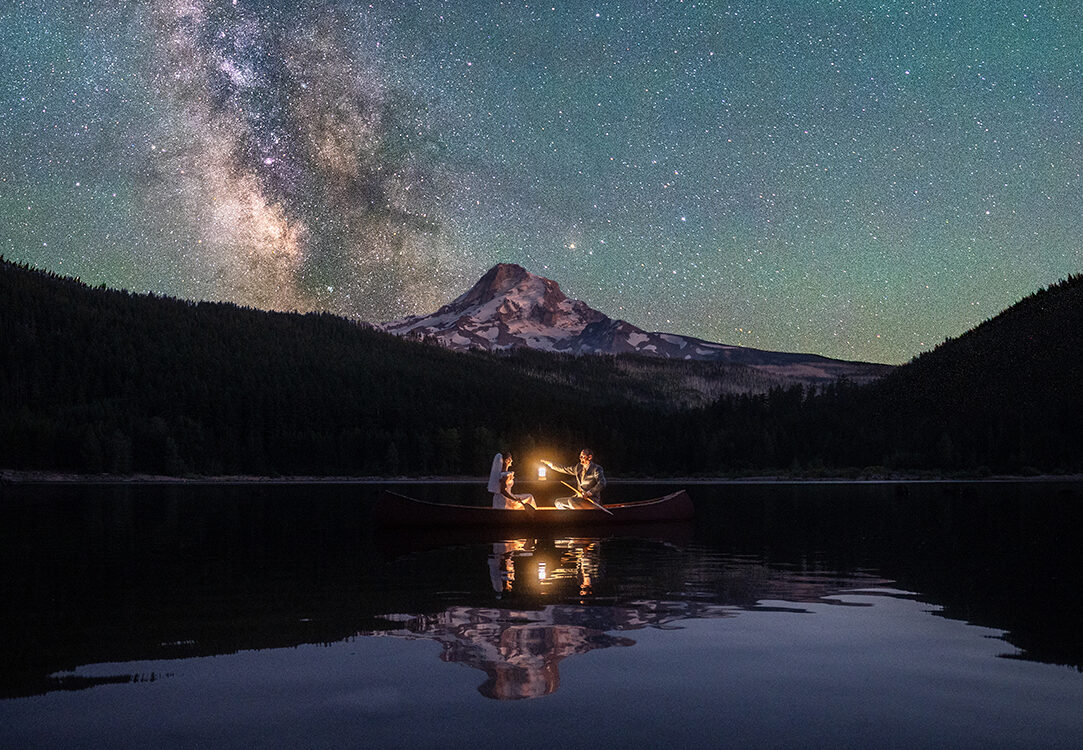
So you want to experience the magic of the Milky Way on your elopement day? YAY! Stargazing is the ultimate way to slow down and spend intentional time together without the noise, distraction, and bustle of daytime – and BONUS: you’ll come away with some incredible and truly unique pieces of art from your elopement day!
So what exactly is “Milky Way Season” – and when is it?
While there are ALWAYS stars in the sky overhead, the Milky Way isn’t always there. (Well, in terms of the fact that it is literally our galaxy it IS always there)! However, the most recognizable, bright, and dense collections of stars that we call the Milky Way “core” aren’t always visible from the northern hemisphere, where I spend most of my time and where most of my clients live or visit. (The northern hemisphere is everything on Earth above the equator).
The Milky Way “core” is the brightest and most recognizable part of our galaxy – it’s what you typically see depicted in photos.
In the United States, our Milky Way season runs from March through October, depending slightly on your latitude. More northerly latitudes, like the Pacific Northwest, have a season that begins in March and ends in September. More southerly locations, like Arizona, have a slightly longer season into October. Click here to read about what every month of the year offers in the Pacific Northwest!
In the spring (think March and April) we can begin viewing the Milky Way for the year. This is what we refer to as “panorama season” (or “pano season” for short). This is because the alignment of the Milky Way relative to our horizon is more horizontal, allowing us to photograph horizontal panoramas of it. This alignment of the Milky Way is more rare in photos because it requires much more work to capture and requires a bit more effort to experience. The extra work to capture the Milky Way is due to needing to take multiple frames and stitch them together to produce an image of the horizontal Milky Way arc. The extra effort is due to the Milky Way core not rising above the horizon until the wee hours of the morning – think 3am. Contrast that with Milky Way core viewing in late summer when the best bits (the core) become visible immediately after sunset: way easier.
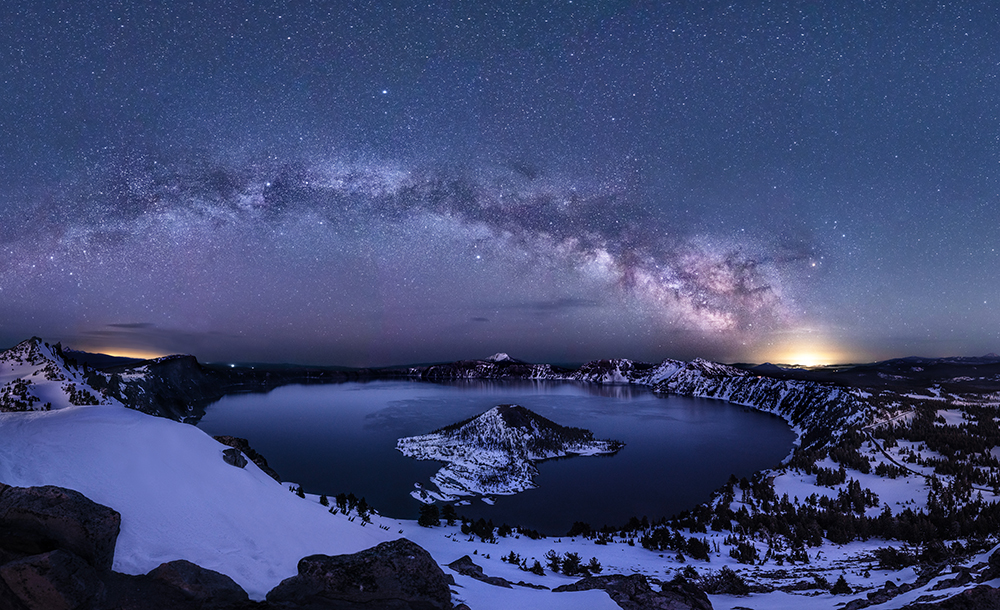
In late Spring and early summer the Milky Way core rises above the horizon at a more reasonable time of around midnight. The orientation of the Milky Way core begins lower in the sky and moves toward a more angled look over the course of a few hours. The sun rises before the Milky Way achieves vertical orientation. In the Pacific Northwest, May and June can be fickle with weather, but planning your elopement in more dry areas of the region can mitigate that risk. In the Southwest, late Spring and early Summer is a fantastic time for weather and Milky Way photography.
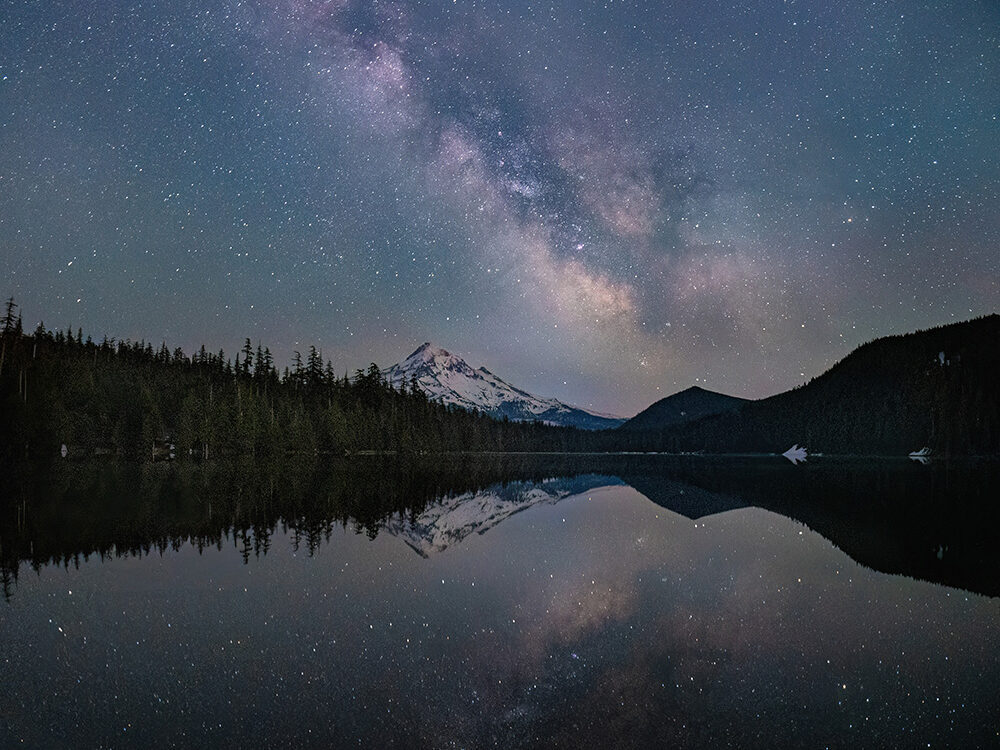

In late summer the Milky Way core rises shortly after to immediately after sunset, and the orientation relative to the horizon becomes vertical. Weather in the Pacific Northwest becomes more predictable and favorable – and more comfortable at night. In the Southwest, conditions remain dry and favorable, and weather is typically warm to hot.
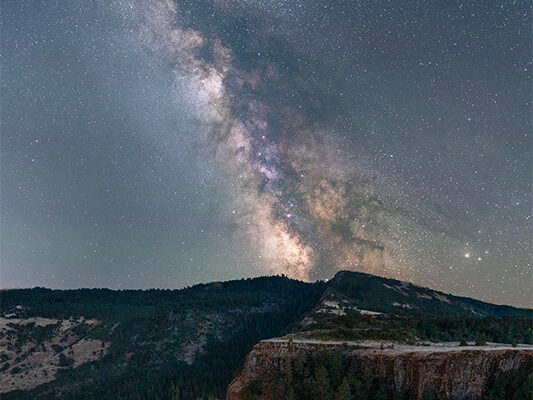
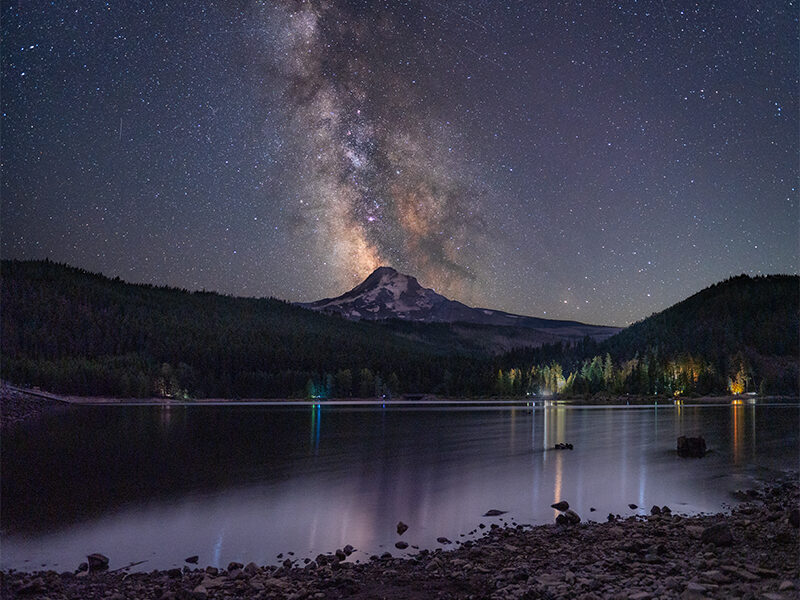
In Fall the Milky Way core is completely vertical in alignment and is visible immediately after sunset. At more Northern latitudes (e.g. Pacific Northwest) the core is low on the horizon or even below the horizon. Being high in elevation in relationship to the horizon is key to getting the entirety of the Milky Way core in September. In October, you begin to lose the bottom of the core. Meanwhile, in the Southwest, you can still achieve a more defined core into October. However, in both regions, the window to take photos of the Milky Way is short – it dips below the horizon much more quickly than in summer.
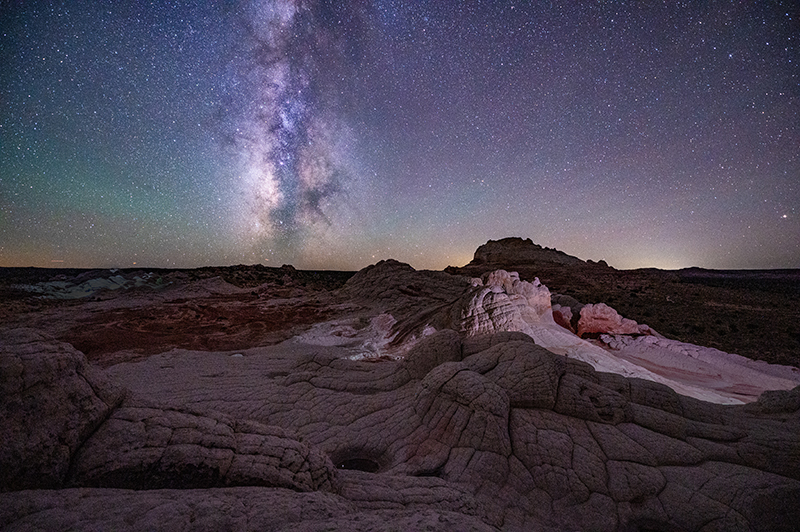
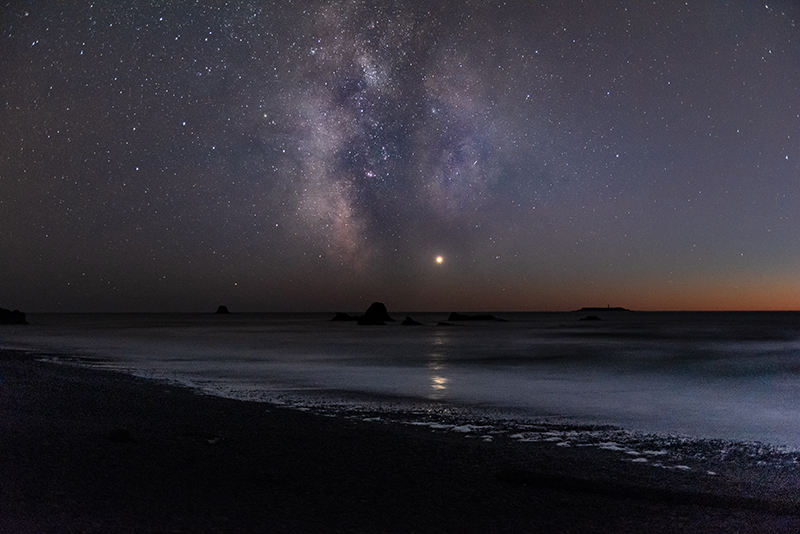
If stargazing under the Milky Way on your elopement day is important to you, it’s imperative that we talk through all of your options and craft a day that feels the best to both of you. My client consultations go deep into detail to plan the very best adventure under the stars – we’ll talk moon phase, moonrise and moonset, Milky Way season (early, middle, or late), Milky Way orientation, and time of night as well as locations and seasons that match your vision.
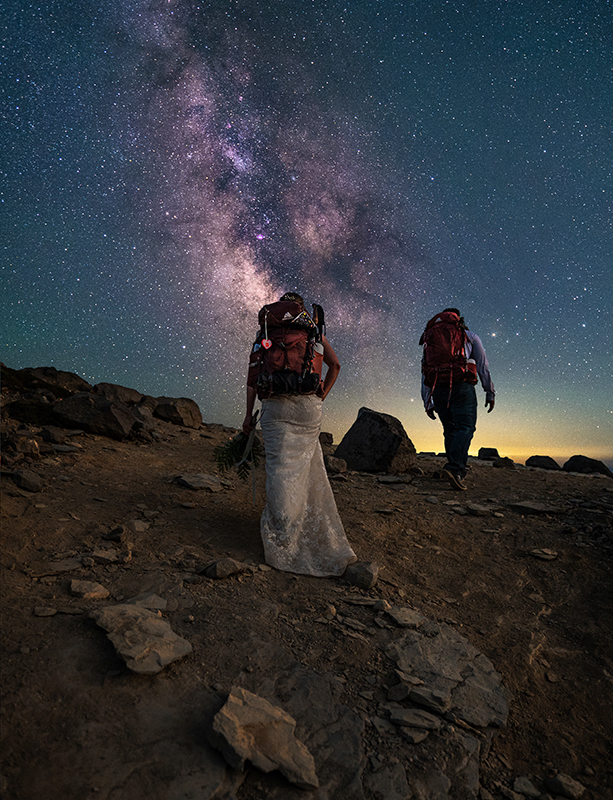
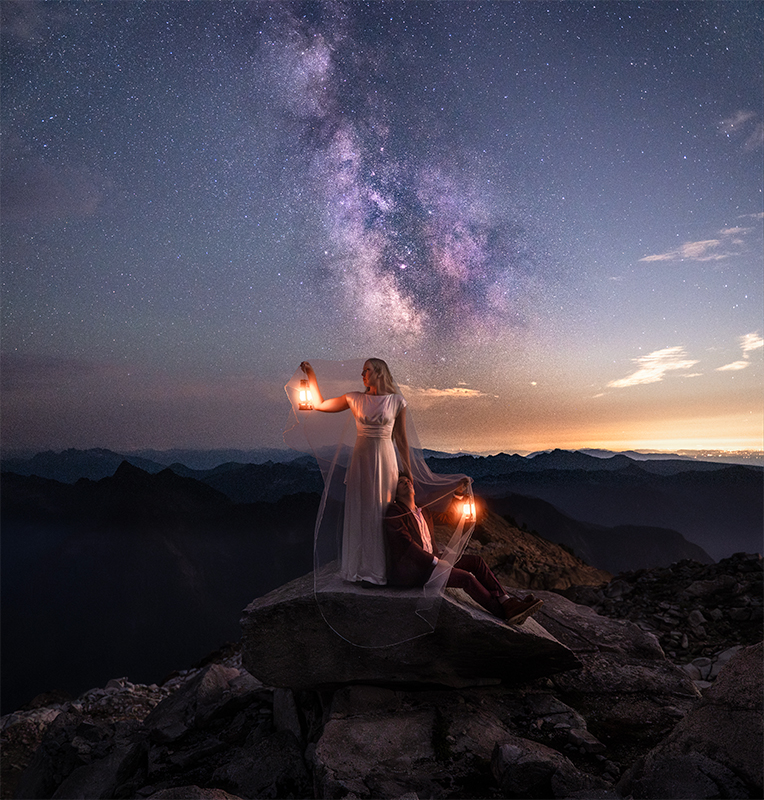
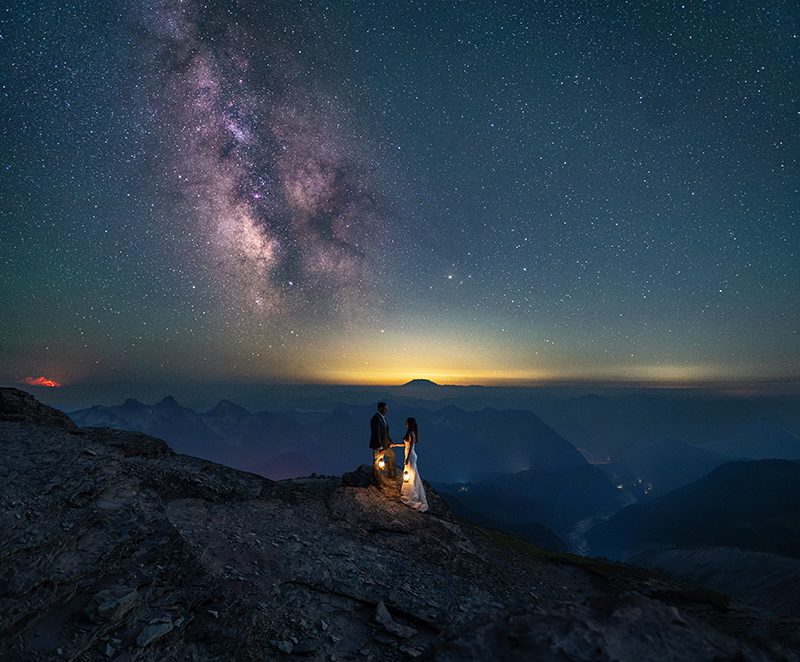
Once you become a client you will also have access to my 80+ page guide to eloping under the Milky Way! In it you’ll find tons of location inspiration with REAL photos (and also plenty of nerdy science deets). Here’s a sample location from the guide:

© Hales Trails Photography
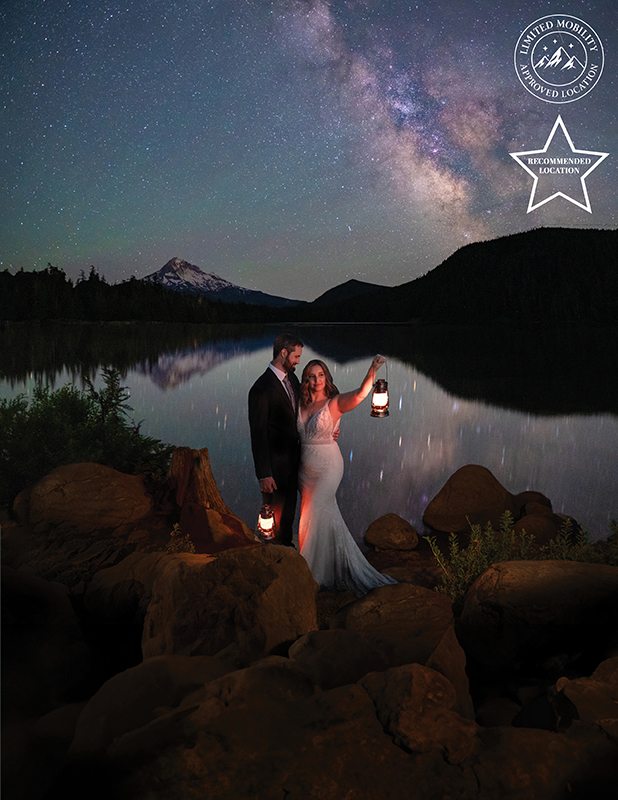
© Hales Trails Photography
Below are a few very different examples of elopements with Milky Way adventures. Which one sounds most like you and your adventure style? Together, we can craft a day (and night) unique to you both!
An October elopement in Utah once the temps cool down, but the Milky Way core is still visible. You take in the sunset at a drive-up location and as soon as it becomes dark, the stars come out. You’re back to your car almost immediately and in bed by ten!
A July intimate wedding in the Pacific Northwest at an easily accessible but stunningly beautiful location: allowing you to drive back to comfortable accommodations after stargazing or even include other special people in the nighttime experience.
A March elopement in Arizona before it gets insanely hot: you backpack to a remote, dark-sky location and wake up at 3am to experience the wonder of the Milky Way panorama stretching out in front of you. You stay up for sunrise, make breakfast, and then take a nap in your tent before more adventures commence.
An August elopement in Washington while the weather is absolutely prime… exploring the cascade range on a hike that ends at an incredible view for sunset followed immediately by the glittering Milky Way. You hike back in the dark for a few miles and arrive back to your cabin by 12 or 1 am.
A September elopement on top of a peak in Oregon – after backpacking in, setting up camp, and exchanging vows during golden hour you enjoy dinner and dessert as the sparkling stars come into view. You take in the beauty of the Milky Way and are in your tent by 11… but are up again at 5 to experience the magic of sunrise at 7,000’.
No matter which direction you choose to go, your experience under the stars is guaranteed to be unforgettable.
Contact me to get started planning the stellar adventure of your dreams!

This blog was written completely by me, without the use of any AI.
ABOUT ME
PACKAGES + PRICING
CONTACT ME


